


03/07/2026
As Vietnam approaches the end of the first half of 2026, the country's economy has recorded encouraging performance across manufacturing, exports, public investment, and foreign direct investment (FDI). At the same time, the real estate market has entered an important transitional phase, with slowing liquidity, more cautious market participants, and genuine housing demand gradually becoming the primary source of market support. These developments are expected to continue shaping the market during the remainder of the year.
The Real Estate Market Enters a Phase of Adjustment and Consolidation
Vietnam's economy delivered several positive indicators during the first five months of 2026. According to the Ministry of Finance, the industrial production index increased by 9.1% year-on-year, total import-export turnover reached an estimated USD 445.12 billion, registered FDI exceeded USD 24 billion, and public investment disbursement totaled approximately VND 219.4 trillion by the end of May, equivalent to 21.6% of the annual plan—similar in percentage terms to the same period last year but approximately VND 34.8 trillion higher in absolute value.
Against this backdrop, the real estate market has begun to reflect these broader economic shifts. While 2025 was characterized by strong recovery in market sentiment and selling prices, the first half of 2026 has marked a transition toward a more cautious environment, despite the continued imbalance between housing supply and demand.
After years of continuous price escalation, residential property prices—particularly apartment prices in Hanoi and Ho Chi Minh City—have risen well beyond the affordability of most households. According to the Ministry of Construction's latest report, newly launched apartment prices in Hanoi have reached a record average of VND 128 million per square meter, the highest level nationwide. Similarly, data from the Ho Chi Minh City Department of Construction shows that by the end of May, nearly 90% of newly launched housing supply belonged to the high-end segment, while no new affordable housing projects were introduced.
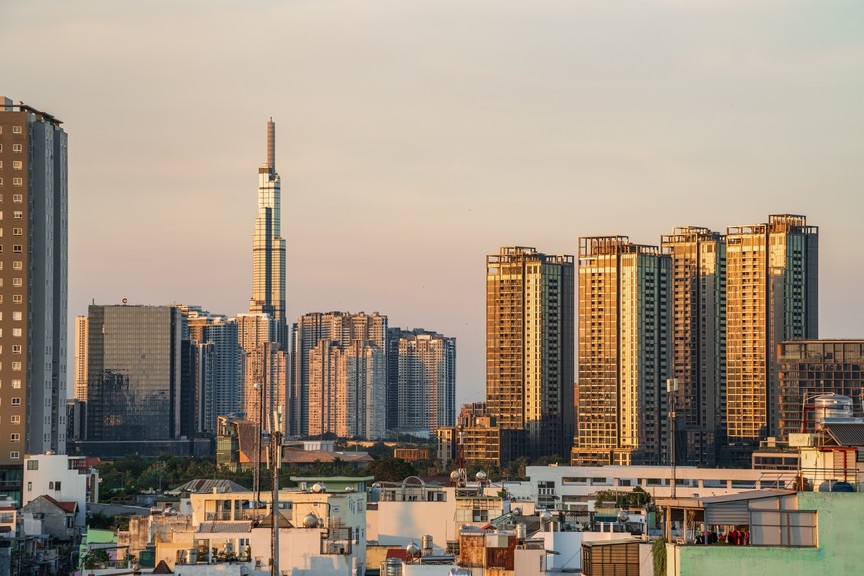
The market is gradually shifting from growth driven by price expectations toward one that prioritizes practical utility and the actual income-generating capacity of real estate assets.
Speaking at the seminar "Land Valuation – The Key to Sustainable Development of the Real Estate Market," Ms. Le Hoang Lan Nhu Ngoc, Senior Director of Strategic Consulting at Cushman & Wakefield Vietnam, noted that at apartment prices ranging from VND 90–100 million per square meter, a typical dual-income household would need between 50 and 85 years of savings to afford a home.
Not only are owner-occupiers facing affordability challenges, but investors are also adjusting their strategies as property prices remain elevated. Rental yields have fallen significantly to around 3–4%, compared with 8–10% a decade ago.
Meanwhile, mortgage interest rates remain relatively high, with fixed rates ranging from 8.5% to 10% and floating rates between 11% and 15%. According to SSI Research, these financing costs are weighing on market liquidity and contributing to price adjustments in both the primary and secondary markets.
According to a survey by the Vietnam Association of Realtors (VARS), investors relying heavily on financial leverage—borrowing between 70% and 90% of property value—have begun offering discounts of approximately VND 100–300 million on apartments and low-rise housing products. In several markets that previously experienced rapid price growth, prices have either stabilized or declined slightly.
VARS data also indicates that market absorption has slowed. During the first quarter of 2026, the absorption rate of newly launched projects reached only around 58%, lower than the previous quarter. In Hanoi and surrounding suburban areas, secondary market transactions declined by 22% compared with the same period last year.
These developments reflect increasingly cautious buyer sentiment after years of continuous price increases. Projects priced above VND 140 million per square meter have experienced noticeably slower sales. Although luxury projects continue to attract a niche group of affluent buyers, the ultra-premium segment is facing mounting liquidity pressure as the pool of qualified buyers becomes increasingly limited.
With borrowing costs remaining elevated and price appreciation prospects becoming less attractive, both investors and homebuyers are taking more time to evaluate purchasing decisions. This trend highlights the market's transition from speculative growth toward a greater emphasis on practical value and long-term asset performance.
Speaking at the conference "Identifying Real Estate Finance Trends 2026," Associate Professor Dr. Ngo Tri Long observed that while many people previously assumed real estate was an asset that would always appreciate, it should now be viewed as a conditional investment whose value depends on a range of measurable factors.
Accordingly, a property only possesses sustainable value when it offers clear legal status, stable cash-flow potential, reasonable pricing, good liquidity, and alignment with the investor's financial capacity.
Many industry experts share this view, noting that market liquidity is no longer evenly distributed but increasingly concentrated in projects offering legal transparency, strategic locations, strong infrastructure connectivity, and reputable developers. Conversely, projects dependent primarily on speculative price expectations or located in areas lacking genuine demand are facing growing challenges.
Overall, the first half of 2026 represents an important turning point for Vietnam's real estate market. Rather than relying primarily on expectations of price appreciation, the market is gradually returning to its fundamental drivers: genuine housing demand, practical usability, and sustainable long-term value creation.
Forecast for the Second Half of 2026: A Highly Segmented Market with Genuine Demand Driving Liquidity
Experts believe that the second half of 2026 is unlikely to witness widespread land price booms similar to previous market cycles. Instead, the real estate market is expected to enter a new phase characterized by greater selectivity and increasingly clear market segmentation.
One of the key growth drivers will continue to be economic expansion, public investment, and infrastructure development. Numerous major transportation projects are being accelerated and are expected to expand urban development corridors while creating new opportunities for provinces beyond Vietnam's two largest metropolitan areas, Hanoi and Ho Chi Minh City.
However, the growth drivers in the coming period will differ significantly from previous cycles. In the past, many investors were willing to purchase properties based solely on planning information or expectations of future price appreciation. Today, practical usability and income-generating potential have become the primary considerations.
This transformation is occurring alongside ongoing improvements in market transparency and the legal framework. Greater transparency in planning information, the government's goal of completing the national land database in 2026, expanded digital identification of real estate assets, tighter transaction management, and policies aimed at curbing speculation are all expected to contribute to a more stable and professional market.
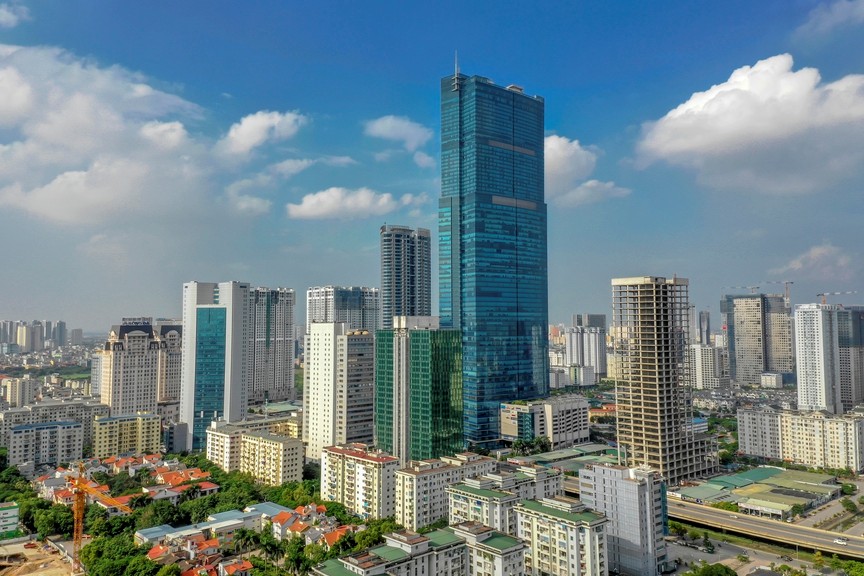
The second half of 2026 is likely to be marked by even stronger market differentiation.
According to Ms. Le Hoang Lan Nhu Ngoc, a representative of Cushman & Wakefield, this period will mark the beginning of a new, more cautious market cycle. Buyers are expected to evaluate purchases more carefully, while developers will need to adopt more prudent strategies to improve project liquidity.
Speaking at the seminar "Land Valuation – The Key to Sustainable Development of the Real Estate Market," Mr. Nguyen Tien Thoa, Chairman of the Vietnam Valuation Association, stated that the period of irrational price surges may be coming to an end, although property prices are unlikely to decline sharply. Speculative activities and price manipulation are expected to diminish, while certain market segments may experience stagnation or moderate price adjustments.
Mr. Thoa explained that as the supply of social housing and affordable commercial housing increases, and as legal bottlenecks are gradually resolved, speculative activities should continue to decline, allowing the market to operate in a healthier and more sustainable manner.
The market transformation is also reflected in changing consumer behavior. According to Avison Young Vietnam, younger generations are significantly changing their attitudes toward homeownership due to affordability constraints, demographic shifts, and evolving consumer preferences. As housing prices continue to rise faster than household incomes, buyers are becoming increasingly cautious before making purchasing decisions.
Against this backdrop, affordable commercial housing in satellite urban areas is expected to become one of the most attractive segments in the next market cycle. Improvements in transportation infrastructure, the development of new urban areas, and Transit-Oriented Development (TOD) models are expected to accelerate population decentralization and stimulate housing demand outside city centers.
This trend is consistent with the urban development strategies of Vietnam's two largest cities. In Hanoi, policies encouraging population redistribution away from the urban core, together with the development of eastern and northern districts and major transport corridors, are creating new growth poles. Meanwhile, Ho Chi Minh City continues to limit high-rise residential development in the inner city while expanding urban development toward surrounding satellite areas and neighboring provinces.
Avison Young Vietnam also forecasts that the residential rental market will become increasingly specialized, particularly as Vietnam's Party and State leadership have identified rental housing as a strategic pillar of housing policy through 2030.
Beyond residential property, industrial real estate, logistics facilities, and digital economy-related asset classes are also expected to perform well, supported by continued growth in foreign direct investment (FDI). Alongside the ongoing global supply chain diversification, demand for industrial infrastructure, warehousing, logistics facilities, and data centers is projected to continue increasing in the coming years.
In addition, green development is gradually becoming a new competitive advantage in the real estate sector. As Vietnam advances its green growth agenda and sustainable finance initiatives, energy-efficient, environmentally friendly projects that comply with ESG standards are expected to attract increasing interest from investors and financial institutions.
Despite these opportunities, the market continues to face several challenges. According to Associate Professor Dr. Ngo Tri Long, interest rates are unlikely to return to the era of exceptionally cheap capital, while real estate lending will remain closely monitored. Financing is expected to increasingly favor reputable developers, legally compliant projects, and segments serving genuine housing demand or generating clear economic value, such as industrial and logistics real estate.
As a result, investment strategies heavily reliant on financial leverage will become riskier, encouraging investors to shift away from short-term speculation toward long-term investments based on real utility and sustainable income generation.
Overall, the second half of 2026 is expected to be characterized by pronounced market segmentation. Investment opportunities will primarily concentrate in segments supported by genuine housing demand, infrastructure development, and urbanization, while projects dependent on excessive leverage or short-term price appreciation are likely to face greater pressure as the market increasingly emphasizes intrinsic value and long-term operational performance.

 Zalo
Zalo Webchat