


The Institute for Real Estate Market Research Vietnam (VARS IRE) assesses that, as Vietnam’s real estate market undergoes a profound restructuring phase within a new growth cycle aligned with the goal of achieving double-digit economic growth, the National Assembly’s issuance of Resolution No. 29/2026/QH16 carries significant importance.
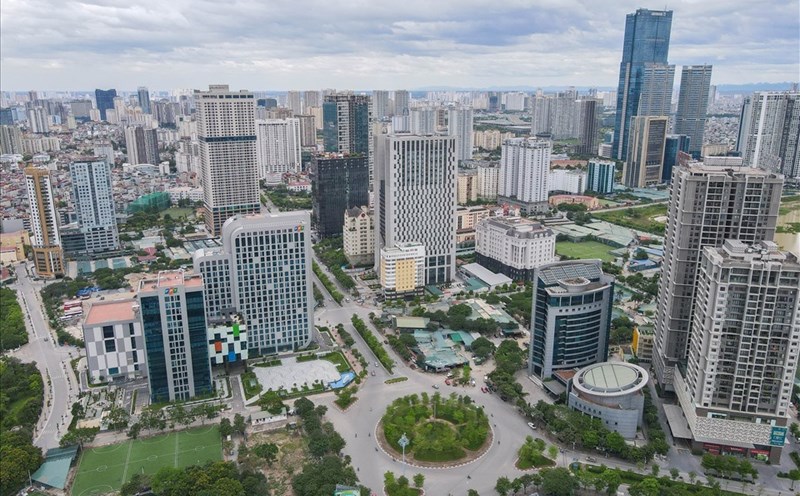
The real estate market is receiving numerous favorable policies for sustainable development.
Beyond merely addressing long-standing issues from the past, the Resolution is considered a “policy catalyst” capable of unlocking resources, restoring confidence, and laying the foundation for the sustainable development of the real estate market in the coming period.
Previously, on April 24, 2026, the National Assembly passed Resolution No. 29/2026/QH16 on special mechanisms and policies to address violations of land laws by organizations and individuals occurring before the 2024 Land Law came into effect, while also removing difficulties and obstacles for prolonged, stalled projects.
One of the key starting points of the Resolution is the reality that thousands of real estate projects nationwide have been “stuck” due to legal bottlenecks beyond the authority of local governments and the central government, requiring a National Assembly resolution for comprehensive resolution. Specifically, according to the Ministry of Agriculture and Environment, as of March 30, 2025, there were 4,489 projects and land funds facing difficulties, with a total area of 198,428.1 hectares and total investment of VND 3,352,946.9 trillion, equivalent to approximately three times the total public investment planned for 2026 (estimated at VND 1.1 quadrillion). If unlocked, this would serve as a major driver for GDP growth, especially as the Government targets high growth in the coming period.
Resolution No. 29/2026/QH16 adopts a more practical and flexible approach by allowing the handling of land law violations occurring before the 2024 Land Law took effect, while also addressing prolonged stalled projects. Notably, the Resolution does not focus solely on accountability but also permits the simultaneous implementation of solutions to bring projects back into operation. VARS IRE considers this a breakthrough shift in policy thinking—from “freezing to resolve” to “resolving to operate,” thereby opening the possibility of reactivating a large volume of supply and capital currently blocked.
The impact of Resolution No. 29/2026/QH16 on the real estate market is expected to be multidimensional. Firstly, removing legal bottlenecks for stalled projects will help boost supply. The categories of projects to be addressed include violations in land allocation, investor selection, land use purpose issues, as well as projects granted certificates not in compliance with regulations. Once these projects are “unblocked,” the market will not only gain additional supply but also see increased competition, reducing localized price pressures.
A move to “unlock” market sentiment
In particular, Resolution No. 29/2026/QH16 plays a crucial role in removing legal bottlenecks for the tourism and resort real estate segment, which has faced prolonged difficulties due to the lack of a clear legal framework. The introduction of mechanisms to address cases where certificates were issued improperly is seen as the first step toward “unlocking” market sentiment.
VARS IRE believes that although not a comprehensive solution, this move could help restore investor confidence—a key factor for the recovery of this segment in the next cycle.
From another perspective, Resolution No. 29/2026/QH16 also has spillover effects on the financial and banking system. In recent times, the stagnation of numerous projects has led to cash flow blockages, reduced corporate solvency, and increased non-performing loan pressure. As projects are resolved and restarted, cash flows will gradually be restored, helping businesses improve financial capacity while easing pressure on the banking system.
However, the effectiveness of the Resolution will largely depend on the role of local authorities, particularly provincial People’s Committees—the bodies directly empowered to review, classify, and handle projects. In practice, most of the current real estate market bottlenecks originate and persist at the local level. Therefore, decentralization is necessary but also places higher demands on capacity, proactiveness, and accountability of the implementing apparatus.
According to VARS IRE, this is not only an important step but essentially the “key factor” determining the effectiveness of Resolution No. 29/2026/QH16. If localities demonstrate proactiveness, decisive action, and flexible application of practical solutions, the process of resolving bottlenecks can be accelerated, creating widespread positive spillover effects. Conversely, if hesitation, avoidance of responsibility, lack of specific guidance, or poor inter-agency coordination persists, the Resolution risks falling short of expectations.
From a strategic perspective, Resolution No. 29/2026/QH16 not only addresses legacy issues but also helps shape a new development cycle for the real estate market. As Vietnam aims for high and sustainable economic growth, unlocking land resources—one of the economy’s key inputs—is considered a fundamental condition. If effectively implemented, the Resolution could reactivate the real estate value chain, thereby promoting related industries such as construction, building materials manufacturing, and finance, while generating positive spillover effects on macroeconomic growth.

Ensuring effective and sustainable reactivation of the real estate value chain
To bring the Resolution into practice and ensure substantive effectiveness, it is necessary to design and implement synchronized, specific solutions. First, the prompt issuance of guiding documents—especially relevant decrees and circulars—is essential to ensure consistent interpretation and application, minimizing fragmented implementation across localities. In addition, specialized task forces should be established at the local level to review, classify, and handle stalled projects, thereby shortening processing time and reducing the avoidance or shifting of responsibility.
Alongside these measures, improving land valuation mechanisms during the legalization process of projects is particularly important. This is a sensitive issue that requires transparent, consistent, and methodologically sound design to ensure no loss of state budget revenue while avoiding excessive financial burdens on businesses.
At the same time, a sufficiently clear institutional mechanism must be established to protect officials during implementation, especially those who are proactive and willing to take responsibility, thereby reducing the risk-averse mindset within the administrative system.
Furthermore, standardizing data systems and processing procedures nationwide is also essential. This will not only enhance transparency and oversight but also minimize risks of negative practices during implementation, thereby strengthening market confidence and stakeholder trust.
Despite being highly regarded, Resolution No. 29/2026/QH16 also requires strict control to prevent abuse. Without effective supervision mechanisms, the policy could be distorted into a “tool for legitimizing violations” or rent-seeking. Therefore, strengthening auditing, transparency, and independent oversight is indispensable.
Overall, VARS IRE considers Resolution No. 29/2026/QH16 a breakthrough policy step, demonstrating the Government’s determination to resolve the “historical bottlenecks” of the real estate market. However, the true value of the Resolution lies not in its content but in its implementation effectiveness.
As the market stands at the threshold of a new growth cycle, Resolution No. 29/2026/QH16 is not only a tool for addressing backlogs but also a critical test of policy governance capacity, intergovernmental coordination, and market confidence in a transparent, stable, and sustainable investment environment.

 Zalo
Zalo Webchat