


(VNF) – The apartment markets in Hanoi and Ho Chi Minh City are entering an adjustment phase. The year 2026 is expected to see abundant supply, stable prices, and selective liquidity, while social housing will become an important “regulating valve” for the market.
Prices Near Peak, Transactions Begin to Cool
By the end of 2025, the average secondary apartment price in Hanoi reached around VND 90 million per square meter, up more than 7% year-on-year, according to OneHousing data. Supply in 2026 is projected to reach 35,000–40,000 units, putting considerable pressure on price levels. Market liquidity has also begun to cool. In Q4/2025, Hanoi and its surrounding areas recorded only about 9,500 transfer transactions, down 22% year-on-year.
Mr. Tran Quang Trung, Business Development Director at OneHousing, commented: “The apartment segment, which has long led the market, is showing a fairly clear reversal. A strong increase in supply will temper price growth and gradually weaken speculative and short-term trading sentiment.”
A report by BHS Group also indicated that apartment prices have approached the peak of the current cycle. With a wave of projects about to launch, the likelihood of strong price increases is low; many projects may only move sideways or see slight increases. In 2026–2027, supply is expected to surge, mainly in satellite urban areas, while inner-city areas will continue to maintain high prices and face infrastructure pressure.
CBRE and industry experts agree that apartment prices will stabilize once they exceed the affordability threshold of most buyers. Ho Chi Minh City provides a clear example: after peaking in 2019, apartment prices have remained largely flat since 2022. Hanoi is forecast to follow a similar trajectory, albeit with a time lag.
Abundant Supply and Rising Interest Rates Shape the Market
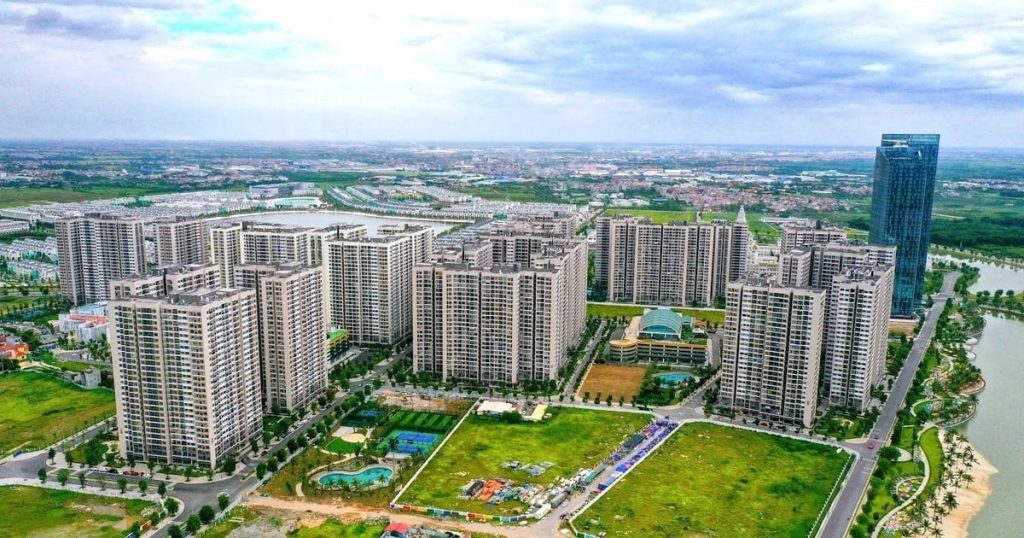
A supply boom is seen as the key factor shaping the market in 2026. After years of being constrained by legal procedures and cautious developer sentiment, the market is entering a strong release cycle.
In 2025, more than 100,000 products were launched, up over 22% from 2024, including nearly 90,000 new units. Within this landscape, social housing has emerged as a “regulating valve,” helping ease pressure on the commercial segment while providing housing opportunities for middle- and lower-income groups.
Mr. Ho Ngoc Tung, Deputy CEO of Sky Realty, noted: “In 2026, social housing supply will grow faster than commercial housing because authorities are facilitating shorter procedures. As hundreds of thousands of social housing units are added, the market will gain an important support pillar, easing demand pressure on the commercial segment.”
By the end of 2025, mortgage rates had risen to about 11% per year—high enough to curb speculation but still acceptable for genuine homebuyers. This rate level has led to rising inventories in projects that are overpriced or lack complete legal documentation. It is estimated that about 30% of recently launched units remain unsold.
The rapid price increase cycle in 2024–2025 pushed average apartment prices up by 40–60% across many primary projects, especially in the high-end segment. According to Nguyen Anh Tuan, Chairman of Phuong Dong, at VND 60–80 million per square meter, a mid-range apartment now costs around VND 5 billion. If a couple borrows 70–80% of the apartment value, monthly interest payments could reach VND 30–40 million. “Therefore, demand now depends heavily on real purchasing power rather than short-term price appreciation expectations,” Mr. Tuan emphasized.
Speculative capital flows have declined sharply, with demand shifting mainly toward owner-occupiers, expected to account for about 60% of total market demand in 2026. Projects with poor quality, excessively high prices, or incomplete legal status will struggle to sell, while projects ready to serve real housing needs will be prioritized.
Market Enters a Rebalancing Phase
In 2026, the apartment market is unlikely to be “hot” in terms of explosive price growth and speculation. Instead, it will be a year of filtering and restructuring, with mid-range housing and social housing taking center stage.
According to CBRE, when supply exceeds demand, the market will self-adjust and prices will stabilize. Nguyen Van Dinh, Vice Chairman of the Vietnam Real Estate Association, stated: “2025 recorded the highest supply growth since 2020. Transactions recovered clearly, and after a strong surge, real estate prices have gradually stabilized under regulatory measures.”
VinaCapital forecasts that amid abundant supply and rising interest rates, primary prices may see slight downward adjustments, while liquidity will be selective. CBRE emphasized that the market will run in parallel with two product groups: ready-to-move-in projects serving immediate housing needs, and newly launched projects where buyers are willing to wait for better pricing.
Social housing, priced at only one-half to one-third of commercial housing in the same area, is expected to serve as a key support pillar. With more options aligned with buyers’ affordability, competition will revolve around real use value, amenities, and sustainability rather than short-term price expectations.
To ensure healthy market operation, experts recommend significantly increasing genuine supply by accelerating the development of social housing and affordable commercial housing, resolving legal bottlenecks, and balancing supply and demand to stabilize prices.
Providing young buyers with preferential loan mechanisms featuring reasonable interest rates and long tenors will improve housing accessibility, particularly for mid-range apartments priced at VND 3–5 billion. Adjusting payment schedules and offering interest support will also help buyers enter the market more easily and reduce pressure.
Developers are advised to restructure products, focusing on quality, amenities, appropriate pricing, and real demand. The government should also enhance transparency mechanisms, develop state-managed real estate transaction centers, rationally adjust land-use fees, and encourage the development of reasonably priced commercial housing.
Overall, 2026 is unlikely to be a “hot” year in terms of explosive price increases. The apartment market will continue to play a central role in urban real estate, but its attractiveness will stem from meeting real housing demand, reasonable pricing, and synchronized infrastructure and amenities.
Abundant supply, capital shifting toward owner-occupiers, and proactive government participation will help the market enter a more sustainable rebalancing phase. Social housing not only ensures social welfare but also serves as a “regulating valve” to stabilize the commercial segment and reduce price and speculative pressure.
Mr. Ho Ngoc Tung emphasized: “The apartment market in 2026 will no longer be ‘feverish’ in terms of explosive price growth, but it will be stable, with good liquidity driven by genuine housing demand, and the market will develop more sustainably.” In the new cycle, growth quality will be the true measure of how “hot” the market is.

 Zalo
Zalo Webchat