


29/12/2025
The imbalance among market segments, high development costs, and revenue pressure on real estate companies make it difficult for housing prices to decline despite rising supply.
According to data from the Vietnam Association of Real Estate Research and Evaluation (VARS IRE), new housing supply this year recorded an increase of approximately 50% compared to 2024. A series of projects have had legal bottlenecks resolved, been restarted, or newly approved in major cities such as Hanoi, Ho Chi Minh City, Da Nang, Khanh Hoa, and Tay Ninh. In these five localities alone, as many as 1,759 projects have been “unblocked.”
A report by the Ministry of Construction also shows that nationwide there are currently 3,297 housing projects with a scale of about 5.9 million units and total investment capital exceeding VND 7.42 quadrillion. Of these, commercial housing and urban area projects account for an overwhelming proportion with more than 5.2 million units. The social housing segment has also recorded positive figures, with 698 projects comprising over 657,000 units, up 13% compared to the end of last year. This year alone, the number of completed social housing units exceeded the plan by more than 102%.
Although supply has increased, housing prices show no signs of cooling down. According to VARS IRE statistics, this year apartment prices in Hanoi increased by up to 96%, Ho Chi Minh City nearly 57%, and Da Nang more than 72% compared to 2019. Other housing segments such as land plots, villas, townhouses, and individual houses also recorded strong price growth, up to 30% this year. In the fourth quarter, housing prices showed signs of slowing and moving sideways in some markets, but in reality no price declines have been recorded.
According to CBRE Vietnam, this year apartment prices in Hanoi and Ho Chi Minh City recorded increases of 21–23% year-on-year. Provinces neighboring the two major cities also saw housing prices rise by 15–30% compared to last year, despite a clear improvement in housing supply.
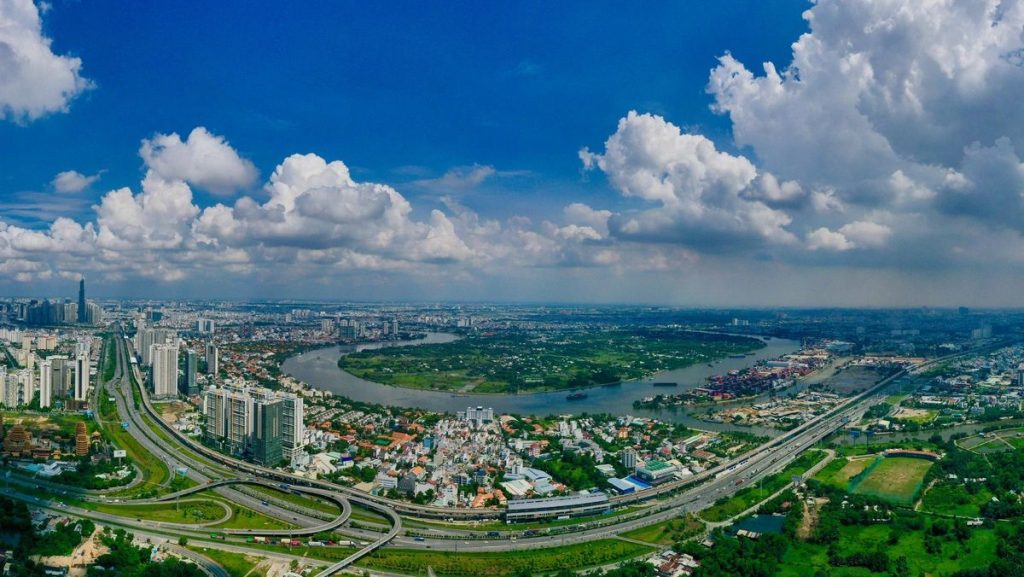
Explaining why supply has improved but housing prices have not cooled, experts believe the main reasons stem from product structure imbalance and rising project development costs.
Ms. Dương Thùy Dung, Executive Director of CBRE Vietnam, said that this year Ho Chi Minh City and its satellite provinces have nearly 30,000 housing products being developed. However, in Ho Chi Minh City, the high-end segment accounts for up to 90% of the available supply, while in former Bình Dương and Tây Ninh it accounts for nearly half. Meanwhile, the supply of affordable housing for middle-income groups continues to be scarce, meaning that increased supply does not resolve price pressure.
Sharing the same view, Mr. Trần Minh Tiến, Director of One Mount Group, said that the supply–demand mismatch has lasted for many years and has become increasingly serious as most newly launched projects this year belong to the luxury, ultra-luxury, and high-end segments. Projects with moderate price levels are almost absent, leaving the market without a solid foundation of genuine end-user demand.
Social housing, the segment expected to act as a “pressure release valve,” has also not developed as expected. VARS IRE noted that this type currently accounts for only about 5–6% of total projects. Although about 657,000 units are being implemented nationwide, this number is still far too small compared to the housing needs of millions of urban workers.
According to experts, the supply mismatch is not only due to corporate business strategies but also stems from cost structures. Land-use fees, material costs, financial costs, and legal expenses have all risen sharply, pushing up project costs and narrowing the room for developing low-priced housing.
A developer in eastern Ho Chi Minh City said the company is implementing a project along National Highway 13, with land-use fees of about VND 68 million per square meter, while site clearance costs under market mechanisms have risen to nearly VND 100 million per square meter. In addition, the company must borrow bank loans throughout the implementation process, while construction material costs have surged. The price of construction sand alone has increased from VND 300,000–400,000 per cubic meter to nearly VND 1 million. “High costs make it very difficult for housing prices to decrease,” he said.
Ms. Nguyễn Thị Thanh Thảo, Deputy General Director of Phú Đông Group, said that developing “affordable-priced” housing is far from easy. Land costs usually account for about 40% of the total project cost, and can be even higher if land is acquired from the secondary market. This expense must be paid upfront using equity and borrowed capital, placing interest rate pressure on enterprises even before projects officially commence. In addition, construction and infrastructure costs account for about 25–30%, with the remainder covering marketing, sales, legal procedures, and project management.
Notably, according to Ms. Thảo, implementation progress plays a decisive role in business efficiency: if a project is completed on schedule, costs can be controlled; but just a delay of a few years can result in additional tens of billions of dong in interest expenses, marketing, or construction management costs, eroding profits.
Faced with the reality that supply has improved but selling prices show no signs of decline, the Ministry of Construction has proposed several groups of solutions, including improving institutions, simplifying administrative procedures, studying the establishment of real estate and land-use rights transaction centers managed by the State, and strengthening control over credit and the corporate bond market.
From a market perspective, Dr. Nguyễn Văn Đính, Chairman of the Vietnam Association of Realtors, recommended that the government create conditions to promote the development of projects priced in line with people’s affordability, while also removing legal and land-use fee “bottlenecks.” Only when input costs are controlled and project implementation timelines are shortened will the market have room to adjust prices in a more sustainable direction.

 Zalo
Zalo Webchat