


Real estate transactions have declined sharply, while inventory has also risen significantly. The housing and real estate market report released by the Ministry of Construction on August 21 showed that market liquidity has weakened and absorption rates remain low, putting pressure on developers’ cash flows and inventory.
According to the Ministry of Construction, in the second quarter, approximately 100,005 real estate transactions were successfully completed nationwide (equivalent to only 71.5% of the figure in Q1/2026 and 63.7% of the figure in the same period of 2025). Thus, the number of transactions fell by approximately 28.5% quarter on quarter and approximately 36.3% year on year.
Of the total transactions, apartments and individual houses recorded 26,567 transactions (equivalent to 86.1% of Q1/2026 and 77.1% of the same period in 2025).
Land transactions declined even more sharply. In Q2, the country recorded 73,438 successful land transactions (only 67.4% of Q1 and just 59.9% of the same period in 2025).
Notably, real estate supply has improved significantly. In Q2/2026, 131 projects were deemed eligible to sell future-formed residential properties, with approximately 59,073 units (up 23.6% from Q1 and 70.1% year on year). However, liquidity is clearly declining, particularly in the land segment. Compared with the same period last year, the number of land transactions fell by more than 40%, while transactions involving apartments and individual houses also declined by nearly 23%.
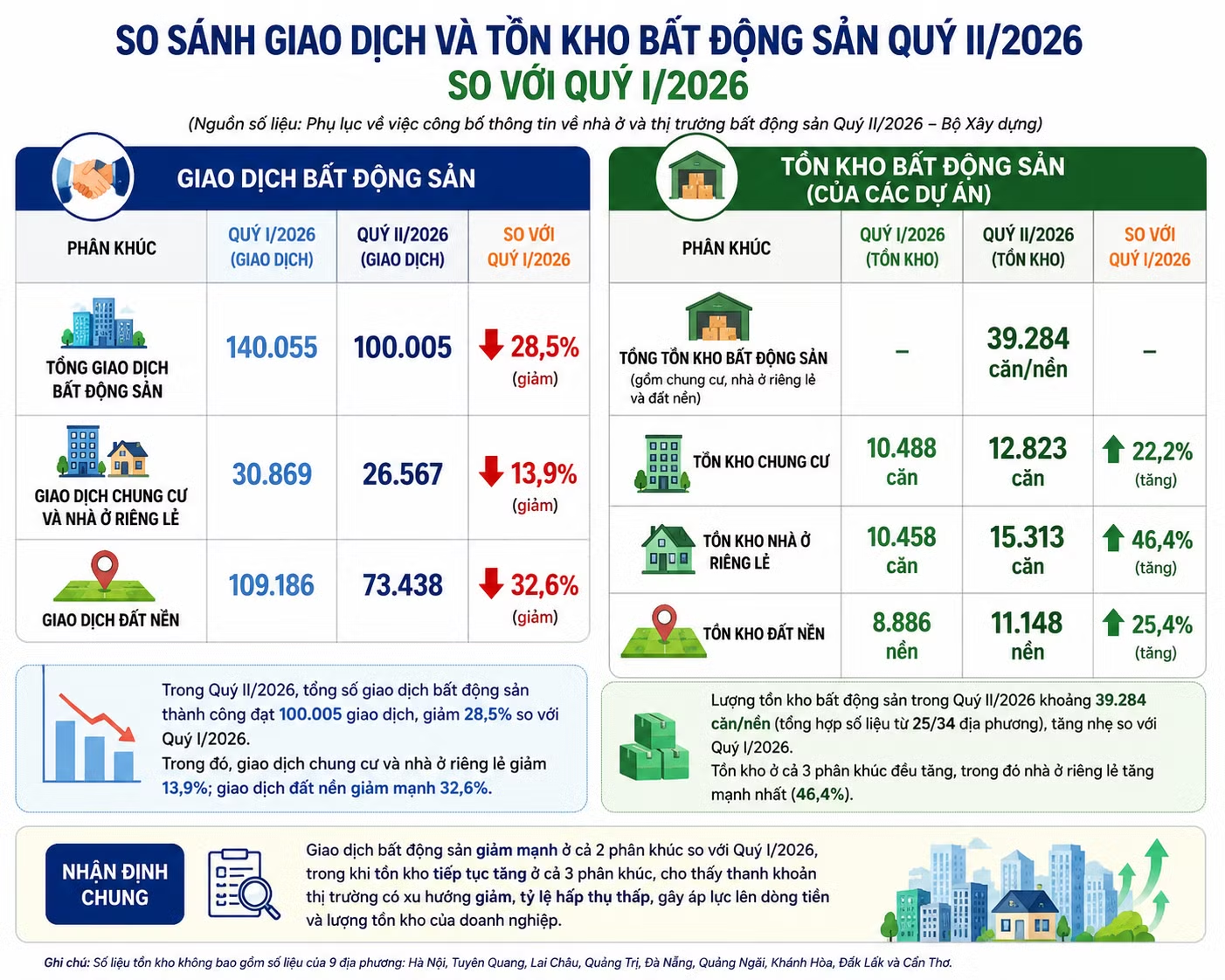
Data from the Ministry of Construction shows that real estate transactions have declined sharply in recent times.
(The table on the left shows the volume of real estate transactions, the table on the right shows inventory)
In contrast to transaction activity, real estate inventory continues to increase. According to the Ministry of Construction, data compiled from reports submitted by 25 out of 34 localities shows that developers’ real estate inventory at projects in Q2/2026 stood at approximately 39,284 units/lots, including apartments, individual houses and land lots.
Of this, apartment inventory stood at 12,823 units (up approximately 22.2% from Q1/2026). Inventory of individual houses reached 15,313 units (up approximately 46.4% quarter on quarter). Notably, land inventory reached 11,148 lots (up approximately 25.4%).
Thus, all three product groups recorded higher inventory than in Q1, with individual houses posting the strongest increase.
The decline in transactions while inventory rises highlights a paradox in the current real estate market: supply is showing signs of improvement, but purchasing power has yet to keep pace. The market is therefore entering a period of more intensive screening, in which selling prices, affordability and genuine housing demand will determine the absorption capacity of each project.

 Zalo
Zalo Webchat