


After a period of strong real estate price increases in many areas, particularly in the apartment segment, the market enters 2026 amid multiple new influencing factors simultaneously emerging, ranging from legal policy changes and capital flows to shifts in supply structure. These developments are expected to reshape market dynamics while increasing divergence across segments, regions, and groups of developers.
One notable breakthrough is the pilot mechanism allowing the development of commercial housing projects without the requirement of having 100% residential land. This regulation has legitimized many mixed-use land funds, enabling numerous stalled projects to complete legal procedures and resume development, particularly in major urban areas.
At the same time, local authorities have accelerated the completion of urban planning frameworks. A prominent example is the Hanoi Capital Planning for the 2021–2030 period, which has created an important legal basis for resolving long-delayed projects and unlocking land resources for a new development cycle.
According to Vietcombank Securities Company Limited (VCBS), one of the key factors supporting market recovery in 2025 was the significant improvement in access to capital. Outstanding credit in the real estate and construction sectors reached approximately VND 2.94 quadrillion, up nearly 18%, with credit for real estate developers increasing by nearly 40%. The corporate bond market also regained momentum as market confidence gradually recovered, providing additional financial resources for developers to restart projects.
Entering 2026, however, the credit environment is expected to become less favorable. Policies aimed at controlling the proportion of real estate lending in order to mitigate bad debt risks, together with a slight upward trend in interest rates, will increase capital costs and force developers to be more selective in project development. In particular, proposals to tighten credit for second-home purchases may reduce investment demand, gradually shifting the market toward one driven more by genuine housing demand.
Experts from VCBS also noted that a clear signal of the recovery cycle is the strong increase in state budget revenues from land.
This growth reflects that many projects have fulfilled financial obligations and entered the construction and large-scale sales phases. Consequently, real estate supply during the 2026–2027 period is expected to increase significantly in major urban areas.
Forecasts indicate that the supply of mid-range apartments will expand considerably in Hanoi, Ho Chi Minh City, and surrounding areas, creating substantial competitive pressure as developers accelerate sales in order to maintain cash flow.
VCBS believes that the strong price surge in the Northern market, particularly in the condominium segment, was mainly caused by supply–demand imbalance. Affordable housing supply has remained scarce while genuine housing demand continues to stay high. Rising land, construction, and financing costs have also forced developers to increase selling prices to ensure project profitability. However, the rapid price escalation has significantly reduced housing affordability. The price-to-income ratio in Hanoi increased sharply from 19.6 years in 2024 to 31.1 years in 2026, indicating increasing financial pressure on homebuyers. As a result, the pace of price growth has begun to slow, liquidity has become more selective, and the market is entering a consolidation phase rather than continuing the previous overheating trend.
In the land plot and low-rise housing segments, the trend of “rising prices – declining transactions” has become increasingly evident. Asking prices continue to rise while liquidity remains weak, reflecting investors’ cautious sentiment in the context of high price levels.
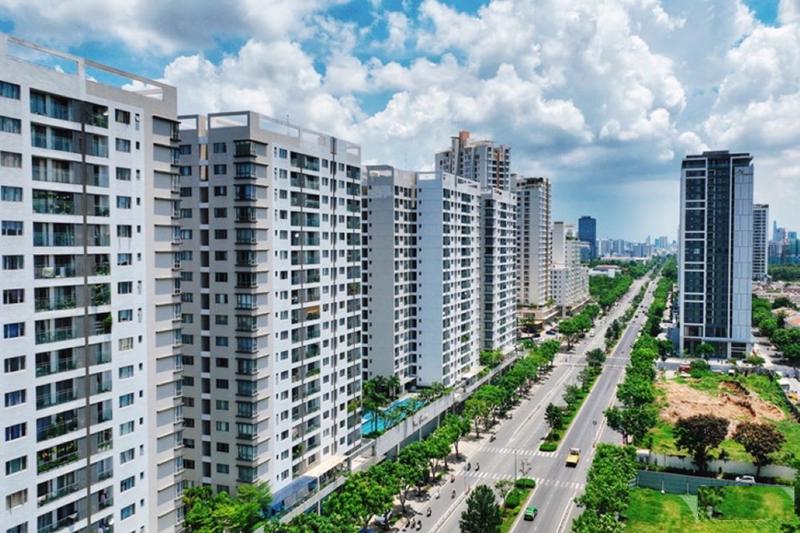
While the Northern market is gradually reaching the peak of its price cycle, investment capital is showing signs of shifting toward the Southern region, where price levels remain more affordable and growth potential is greater. Legal procedures in the Southern region have improved significantly, with faster project approvals thanks to new pilot mechanisms.
Ho Chi Minh City continues to play a central role in supply; however, new projects are still mainly concentrated in the high-end segment in order to optimize profit margins, meaning that the supply–demand mismatch has not yet been fully resolved.
Notably, the spillover effect is expanding to Binh Duong, Dong Nai, and Long An, supported by improved transport infrastructure and relatively reasonable price levels. After many years of stagnation, these markets are beginning to record signs of liquidity recovery.
The social housing segment has shown positive progress. In 2025, more than 102,600 units were completed nationwide, while nearly 700 projects are currently under development, equivalent to approximately 62% of the target set for the 2021–2030 period. This momentum stems from regulations requiring 20% of land funds in commercial projects to be allocated for social housing, along with newly introduced reform mechanisms. However, actual implementation remains slow due to complex investor selection procedures, a shortage of cleared land, and financial returns that are not yet sufficiently attractive for developers. In addition, issues such as brokerage profiteering and unsuitable income eligibility conditions also limit access for those with genuine housing demand.
The VCBS report also indicates that 2026 will no longer be a period of broad-based recovery but rather a phase of clear differentiation among markets, segments, and enterprises.
Selling prices in the Northern region are expected to remain stable, while prices in the Southern region may increase slightly due to capital inflows. Market liquidity will concentrate on projects with complete legal documentation, clear construction progress, and connectivity to key transport infrastructure.
“Higher interest rates combined with increased financial pressure will curb speculative activities, leading the market toward a more sustainable development model driven by genuine housing demand rather than short-term price appreciation expectations,” VCBS experts commented.
According to research data from the Vietnam Association of Realtors (VARS), the market recorded approximately 128,000 newly launched products in 2025, the highest level since 2019 and close to the peak supply threshold. This development indicates that the market is gradually shifting toward a development model based more on real supply–demand balance as well as the financial capacity of participating stakeholders.
In the context where real estate prices, especially in major urban areas, have significantly exceeded average income levels, while capital costs and borrowing interest rates continue to exert pressure, the number of market participants is expected to narrow. End-users are required to prepare stable financial foundations along with long-term accumulation plans. At the same time, investors can no longer easily achieve high returns as before but must adopt more selective strategies, focusing on practical utility value, cash flow generation capacity, liquidity, and risk management. Cases that rely excessively on financial leverage without a long-term strategy will gradually be eliminated.
Ms. Giang Huynh, Director of Research and Consultancy at Savills Ho Chi Minh City, stated that Vietnam’s real estate market is currently undergoing an adjustment phase with restructuring characteristics, laying the foundation for a new and more sustainable development cycle.
From 2026 onward, the market will operate under a new legal framework with the simultaneous implementation of the 2024 Land Law, the 2023 Housing Law, the Law on Real Estate Business, and a new land price framework effective from January 1, 2026.
Although the new land price framework may increase financial obligations for businesses and residents in the short term, in the long run it is expected to enhance transparency and fairness in the investment environment while also resolving long-standing issues related to project land price determination — a factor that previously disrupted market supply.
In reality, a new real estate cycle is taking shape, characterized by strong market screening. Companies possessing clean land banks, complete legal documentation, and strong financial capacity will have clear advantages, while developers heavily reliant on financial leverage may face significant pressure.
After alternating periods of overheating and stagnation, the real estate market in 2026 is expected to move toward a more balanced state: improved supply, reduced speculation, and capital flows directed toward real value. This is no longer a period of “easy quick wins,” but rather a stage that requires long-term strategies, transparency, and strong adaptability from both developers and investors.

 Zalo
Zalo Webchat